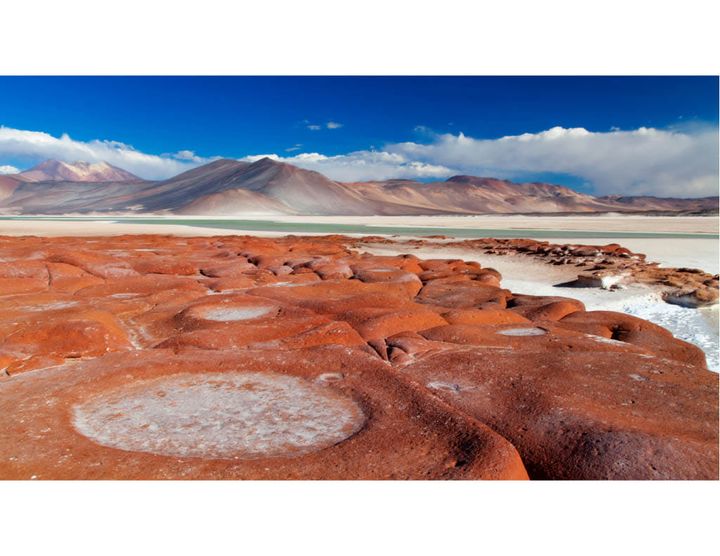
Destinations · Chile
The Valle de la Luna: when the desert becomes another planet
Just 13 km from San Pedro de Atacama, the Valle de la Luna is a place that cannot be explained with words: it is felt.
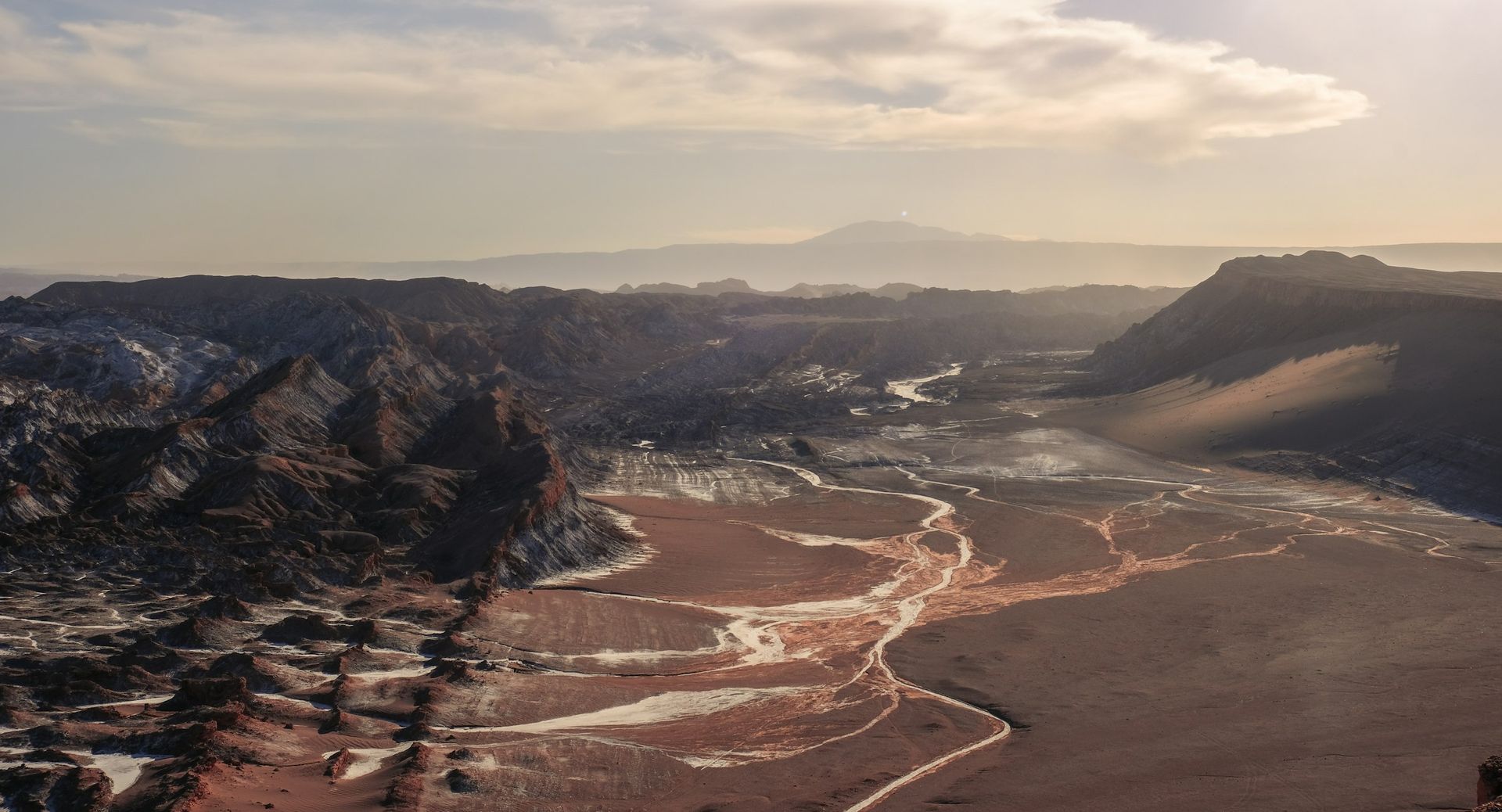
When you hear its name, you picture the surface of the Moon. And when you cross its threshold, you discover that your imagination did not fall short. Just 13 km from San Pedro de Atacama, the Valle de la Luna is a place that cannot be explained with words: it is felt.
A landscape that exists nowhere else in the world
Millions of years of wind and water erosion have sculpted salt dunes, caves, canyons and rock formations that look like they come straight out of a science fiction film. Walking among them is like wandering through an abandoned film set in the middle of the most arid desert on the planet.
The places you can't miss
La Duna Mayor
The first impact. An immense mountain of toasted sand from which a panorama opens up that takes in the whole valley, the Anfiteatro and the Cordillera de la Sal. Climbing to its top before sunset rewards you with one of the best views of the desert.
El Anfiteatro
A natural formation of rock and salt 40 metres high, with an almost flat vertical wall that recalls a Roman colosseum. Its scale is so vast that, standing in front of it, you feel tiny. It is impossible not to stop and look at it.
Las Tres Marías
Three rocky spurs of clay, granite and quartz that rise from the ground like sculptures carved by the wind. The Belgian priest Gustavo Le Paige gave them this name because their silhouette recalls three women praying. They are also known as Los Observadores, silent guardians of the desert. They are the most photographed formation in the valley.
Cavernas de Sal
Underground galleries where the walls sparkle with crystals of rock salt and quartz. Going inside is like crossing a tunnel into another world.
Mina Victoria
Strange rocks shaped by erosion that look like towers of salt about to collapse. A lesser-known corner, perfect for those looking for a moment of solitude.
Mirador de Kari (Piedra del Coyote)
The icing on the cake. Located outside the park, about 6 km from San Pedro along Route 23, this panoramic viewpoint at 2,550 m of altitude offers the most epic view of the valley: the Anfiteatro, the Tres Marías, the Gran Duna and, in the background, the Licancabur volcano (5,916 m) and the Cordillera de la Sal. It is the classic place to watch the sunset, when the desert bursts into shades of pink, orange and lilac. Arrive 30 minutes before sunset to make sure you get a good spot.
Note: Check the access status of the Mirador de Kari before your visit, as there may be temporary closures due to infrastructure work or safety conditions.
Life where you least expect it
In the middle of this apparent mineral solitude, the Salar de Atacama is home to astonishing wildlife: pink flamingos, suris, vizcachas, chululos, foxes and even the majestic puma. The contrast between the extreme aridity and the biological richness is part of what makes this ecosystem unique in the world.
The film set
It is no coincidence that productions such as The Mandalorian and Dune have chosen this landscape as a setting. International film production knows what any visitor senses on arrival: this is the place on Earth most like another planet.
Why should you go?
Because there are places you visit and others you live. The Valle de la Luna is one of the latter. It is feeling the absolute silence of the desert, the dry cold of the afternoon, the wind as your only company. It is photographing a landscape that seems impossible and discovering that it is real. It is returning to San Pedro with the feeling of having been in another world, even though you were never more than 20 minutes away by car.
The Valle de la Luna is not visited once. You come back.
What clothes to take to the Valle de la Luna?
The key is to dress in layers, because the temperature can drop 15-20 °C in minutes when the sun goes down.
Trekking shoes with good soles, closed. The ground is salt and rock, very abrasive. No sandals.
Sun protection (essential)
- SPF 50+ sunscreen: UV radiation at 2,500 m is 40% higher than at sea level.
- Sunglasses of good quality.
- A firm cap or hat (the wind can blow it away).
Other essentials
- Water: 1.5 to 2 litres per person. Water is not sold inside the park.
- A dust cover if you carry a camera or phone.
- Don't wear new shoes for the first time on the day of your visit.
Quick summary: breathable clothing + long trousers + fleece or windbreaker + trekking shoes + sunscreen + sunglasses + hat + water. With that you cover both the afternoon heat and the cold at sunset.